Dear Colleagues,
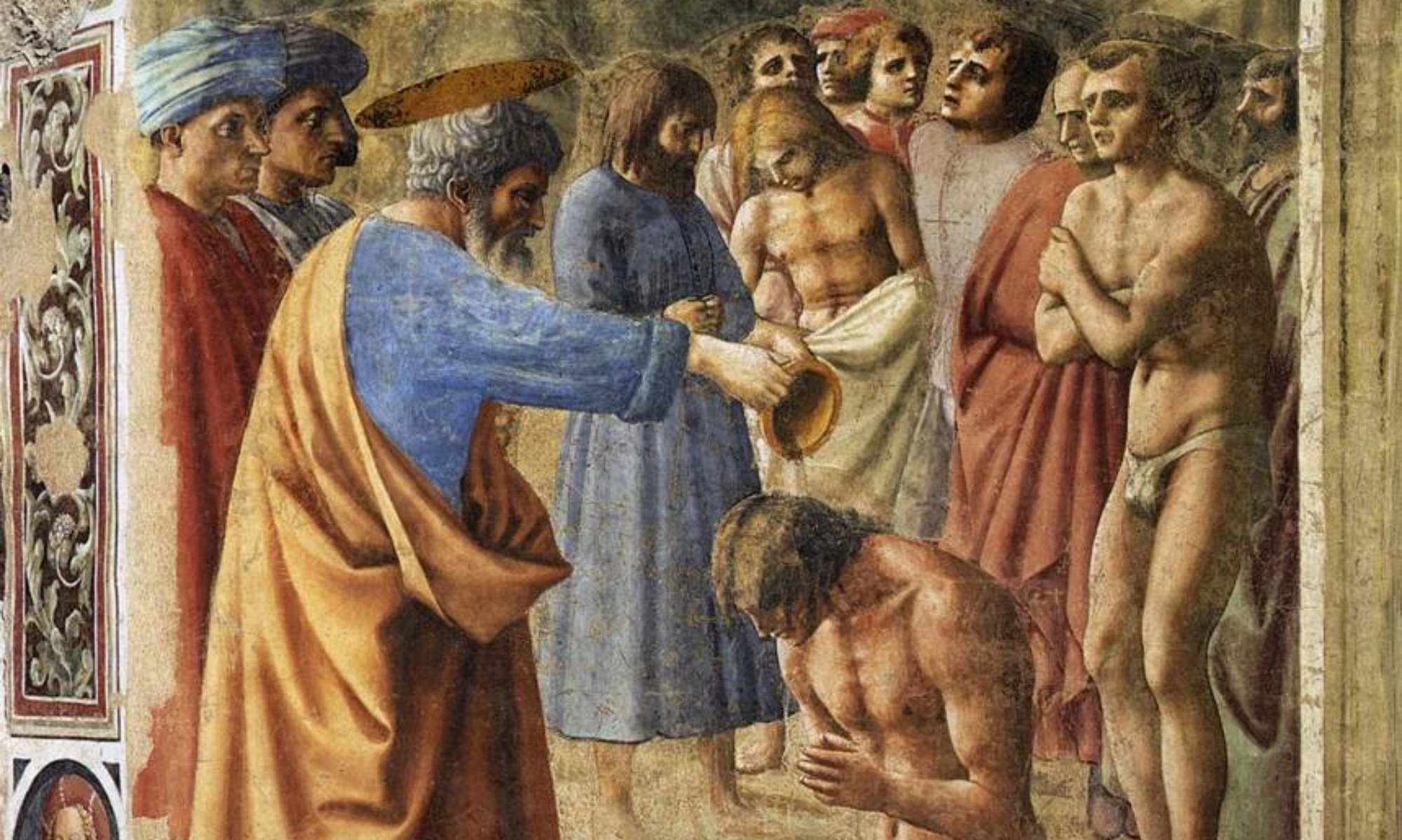
We are glad to inform you that an international e-symposium on baptism in Early Christianity and baptismal inscriptions in Asia Minor will take place on December 19, 2024 on Zoom.us. Water has been the central element of Christian baptism since the very beginnings of Christianity. Baptism has been part of Christianity from the start, as shown by the many mentions in the Acts of the Apostles and the Pauline epistles. Baptism with water, whether by immersion or sprinkling, has always been the primary initiation ritual for Christians. But where did this ritual come from? And what did it mean? Although the term “baptism” is not today used to describe the Jewish rituals (in contrast to New Testament times, when the Greek word βαπτισμός did indicate Jewish ablutions or rites of purification), the purification rites (or מִקְוֶה / מקווה; mikvah—ritual immersion) in Jewish law and tradition are similar to baptism, and the two have been linked.
This e-meeting will focus on the following questions related to baptism in Early Christianity: how did people practice and understand baptism in Early Christian Asia Minor, what kind of connotations did the baptismal use of water evoke in the Asian context, and what significance did baptism gain during the first centuries A.D.? Baptism seems to have been developed in the early years in close contact with the local religious context and the construction of baptisteries in the sixth century A.D. adapted local pagan elements of architecture. The Early Christian baptisteries featured water as the central element of baptism in an architecturally, ritually, and theologically reflected way.
So far the study of baptism in Early Christian Asia Minor we will especially focus on epigraphic evidence which has been overlooked whereas there is still a huge amount of material from excavations and museums in entire Turkey. In this e-meeting, we only focus on baptismal inscriptions in Asia Minor between c. fourth and sixth centuries A.D. and attempt to set out a comprehensive model for the study of Early Christian baptism in Asia Minor. It is also our intention to create a complete bibliography of previous publications on Early Christian baptism and baptismal inscriptions in Asia Minor.
We warmly invite contributions by scholars and graduate students from a variety of disciplines related to this subject. Intended to bring together scholars of Early Christian theology, Roman history and Greek epigraphy to discuss a range of issues concerning this ritual’s characteristics, this video conference should be an excellent opportunity to increase our knowledge about this subject. The following theme groups are the main questions of the symposium which are prescriptive:
- The origins and development of baptism in Asia Minor,
- Relevance and performance of baptism in Early Christian contexts in Asia Minor,
- Early Christian baptismal inscriptions in Asia Minor from archaeological field projects and museums,
- Etymology of Early Christian baptism,
- Ancient Greek and Latin textual sources on Early Christian baptism in Asia Minor,
- Hellenistic and Roman gravestones and other iconographic media depicting Early Christian baptism and baptismal inscriptions in Asia Minor,
- Miscellanea.
On these themes and questions, all approaches and methods susceptible to bringing some progress to our current knowledge are of course welcome: theology, ancient history, epigraphy, archaeology, history of art, cultural anthropology, etc. The symposium will take place virtually on Zoom. All the readings and discussions in our e-conference will be in English and recorded for later viewing on YouTube. The proceedings of the symposium will be published in 2026. The symposium is free of charge.
We would be delighted, if you could consider contributing to our symposium and contact us with the required information below before September 1, 2024. Our e-mail address is: zotsiami@uth.gr and/or terracottas@deu.edu.tr
For all your queries concerning the symposium, our phone number is: +90.544.938 54 64. The organizers seek to widen participation at this symposium and would like to encourage colleagues from all parts of the world to attend. We kindly request that you alert any interested researchers, colleagues and students within your research community who would be interested in participating in this e-conference, either by forwarding our first circular and poster through Academia, Researchgate, Facebook, Twitter, Instagram, or other similar social media, or by printing them and displaying in your institution. Please share them also on your ListServs. We hope that you will be able to join us on Zoom, and look forward to seeing you!
Required information for the participation to the e-conference
Type of your participation (virtual lecturer or virtual observer):
Name:
Academic title:
Institution:
E-mail:
Complete professional address:
Cell phone:
Academia or Researchgate account:
Orcid ID:
Would you agree with the recording of your virtual lecture and to be displayed in YouTube later?:
Any special requests:
Title of your lecture:
Your abstract:
NB: One or two illustrations can be included which should be sent by e-mail to zotsiami@uth.gr and/or terracottas@deu.edu.tr
Scientific committee (to be completed)
Organizing and executive committee (in alphabetical order; to be completed)
Dr Gülseren Kan Şahin (Sinop),
Ms Zoe Tsiame (Volos).